Coupled cooling system
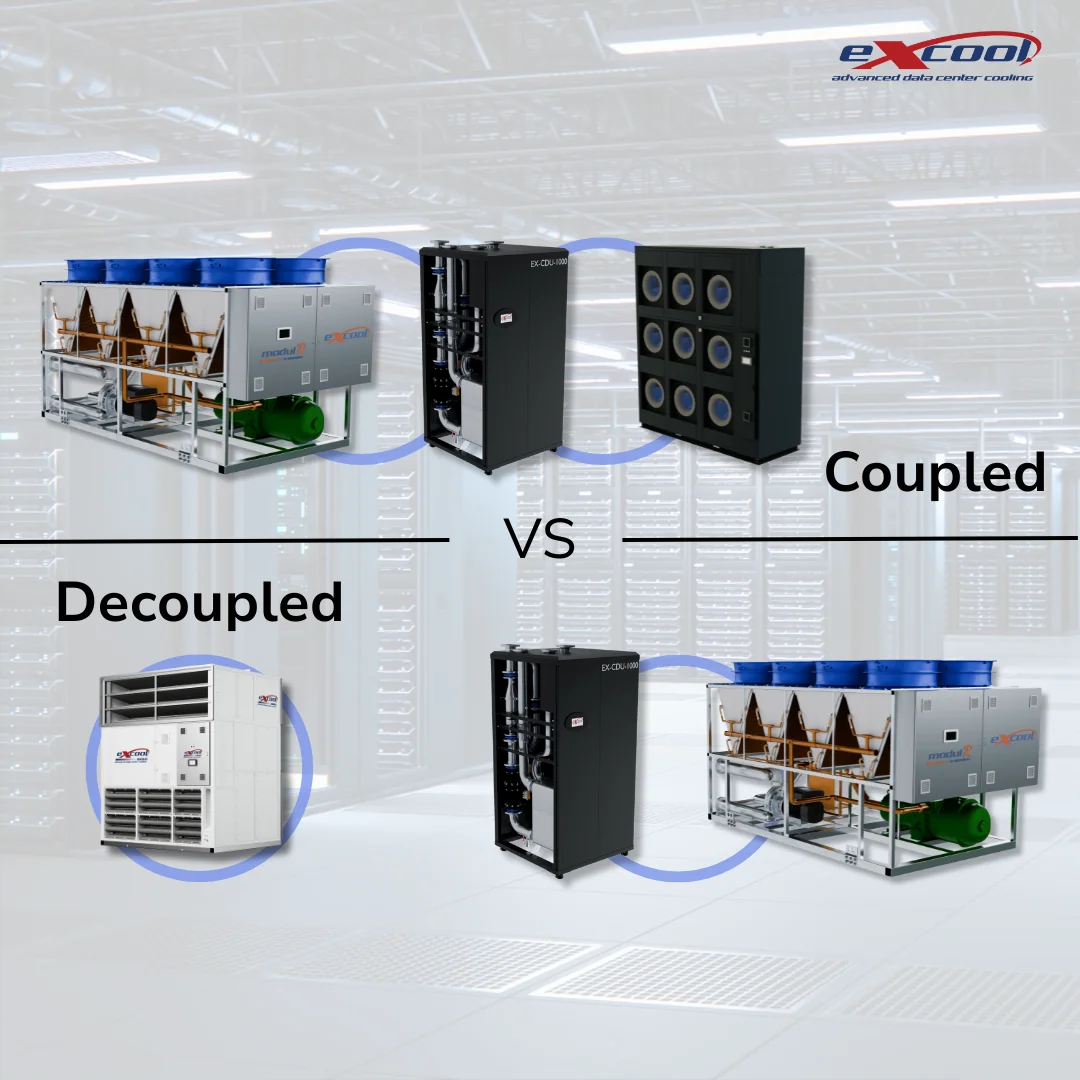
A conventional coupled cooling system includes air-cooled chillers that feed both fan walls and CDUs on one facility-side water loop, coupling the air cooling and direct-to-chip cooling systems.
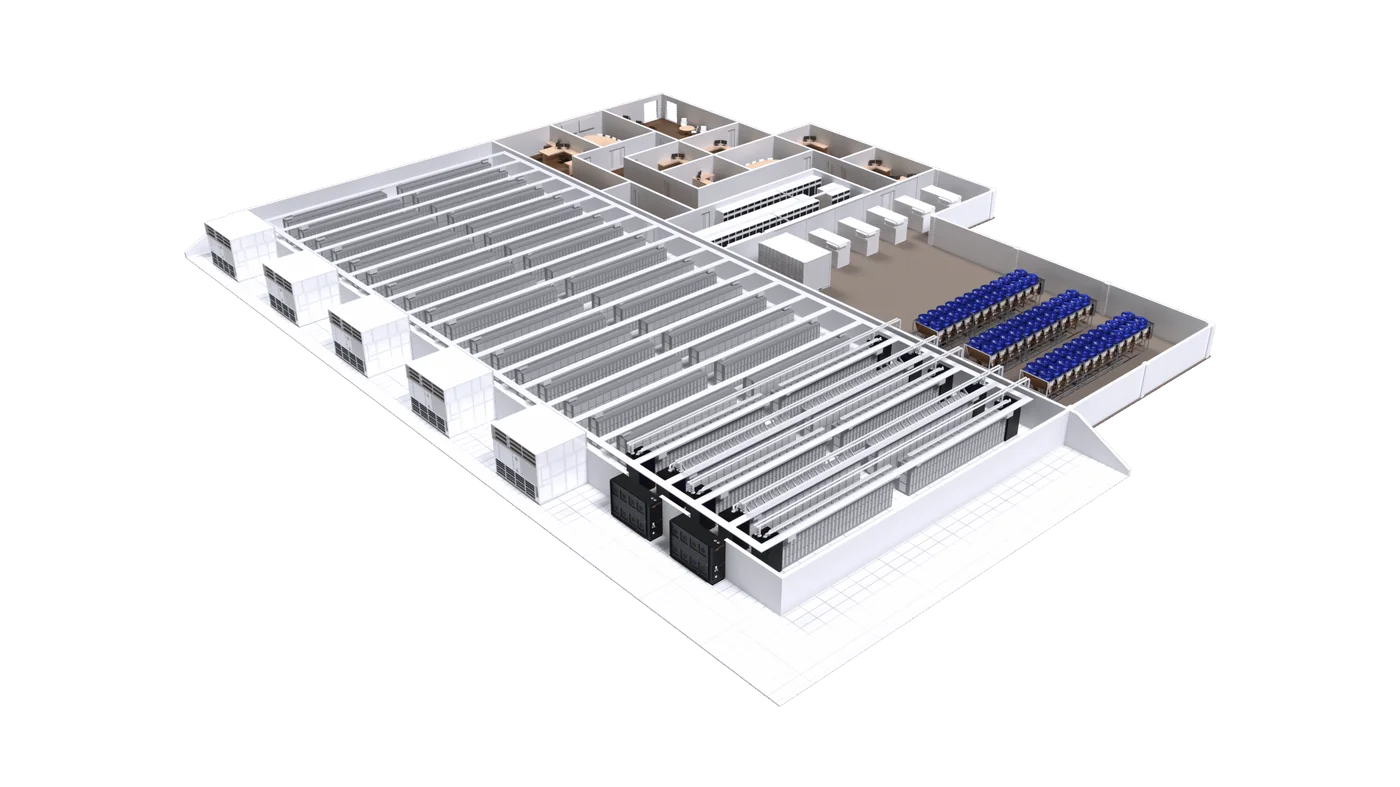
Air-cooled chillers are positioned externally, mounted on the roof or in the building yard. You’ll find the fan wall units within the mechanical corridor as well as the CDUs. CDUs can also be located in the plantroom or end of row.
Within this conventional cooling system, a single primary ring main services all of the cooling units, coupling them.
What are the benefits of a coupled cooling system?
- Mass appeal: since the cooling temperatures have to accommodate air and liquid cooling, most rack requirements will be met
What are the disadvantages of a coupled cooling system?
- Higher OpEx: As the coupled system manages both liquid and air-cooled units within a single primary ring main, more energy is required to maintain the whole system to compensate for the air cooling, making it less efficient
- Longer deployment times: coupled systems require a bigger facility water network with connected equipment, demanding more specialised installation, balancing and expensive commissioning
- More vulnerable to outages: since the whole system is dependent on the chiller, both air and liquid cooling are more vulnerable to outages
Decoupled cooling system
In a decoupled cooling system, air and liquid cooling are separated. A chiller or dry cooler coupled with CDUs manages the liquid cooling. However, air cooling is maintained separately, for example by indirect evaporative cooling units (IDECs). The IDECs would be positioned on the perimeter gantry.
What are the benefits of a decoupled cooling system?
- Lower OpEx: the chiller temperature can be lower to support liquid cooling, massively improving the chiller’s efficiency
- Maximum ROI: by using less power on cooling, more power is redirected into compute
- Free cooling: by using IDECs, it maximises the opportunities for free cooling
- Shorter deployment: running separate cooling systems means that deployment is typically quicker and commissioning is faster, as you don’t have to balance the facility water system across multiple types of units. The IDECs are stand-alone units and can be commissioned solely by the vendor
What are the disadvantages of a decoupled cooling system?
- Higher initial CapEx: setting up the separate systems will initially be more costly