Data center developers are facing a seemingly impossible predicament: demand is outweighing supply.
Typically, the technical assumptions underpinning a data center hall are locked in years before the first rack even arrives. Despite this, demand pressure is pushing developers towards phased expansion and early commitments while the tenant mix is still fluid.
The differences between a conventional air-cooled deployment and a liquid-cooled AI build changes everything. For developers, the challenge arises from ensuring a site can absorb changing demand without forcing expensive redesigns as the market evolves.
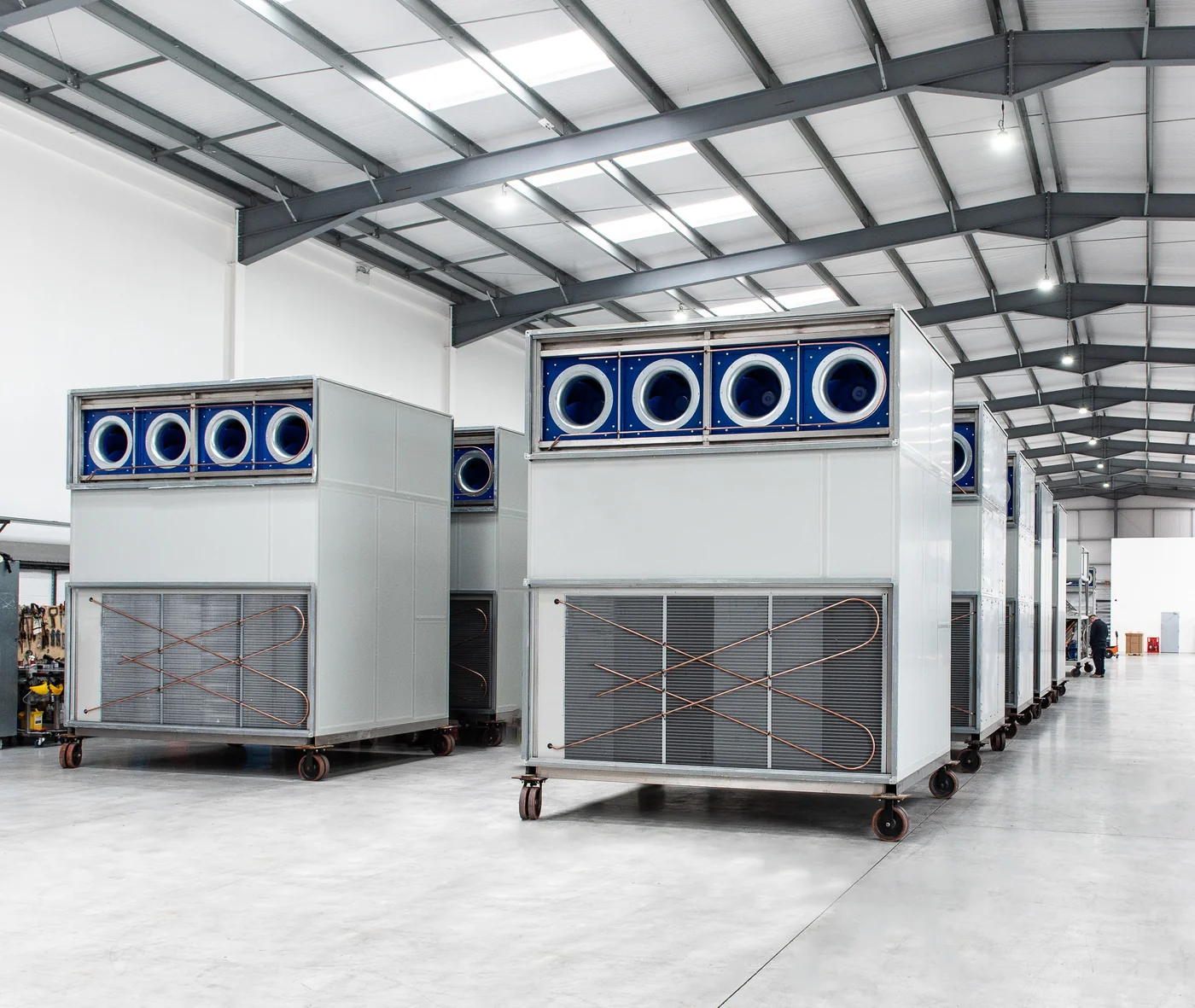
However, there is a solution: packaged, perimeter-deployed systems. They deliver speed, able to be installed quickly while being highly adaptable with adjustable configurations as demand becomes clearer. This is the approach behind the Excool Switch, a packaged hybrid cooling unit designed to support both airside and liquid cooling within a single unit.
The Switch is designed to serve a data hall’s need for conventional air-cooled deployments, liquid-cooled AI loads (including those with a supply temperature of 45°C and above), or a blend of both, with the presumption that the balance may change over time. The Switch combines liquid and airside cooling within a packaged module of up to 1.2MW, making 2.4MW achievable in as little as 10m of external wall space with variable load allocation between the two. The unit also integrates indirect glycol free cooling, supporting high efficiency operation when ambient conditions allow.
Engineered to facilitate rapid deployment, the Switch units are heat-load tested prior to delivery to reduce on-site commissioning time, specifically designed to streamline the installation process. This is supported by Excool’s market-leading delivery times of just 16-18 weeks. This enables late-stage deployment within the build programme, as developers can defer a significant portion of cooling CAPEX until tenant requirements are confirmed and fit-out is imminent, improving cash flow on phased builds while still being ready regardless of whether the tenant requires liquid or air-cooled facilities.
The Switch removes the need for primary chilled-water pipework while minimising supporting equipment requirements, giving it the lowest connected load of any comparable system. It also avoids the need to allocate internal data hall space for air cooling units or CDUs, supported by an in-built buffer tank for additional redundancy in instances of a power failure or large transient load steps.
In an operating data center, the service running on a server is often less important to facilities teams than the behaviour it creates in power and heat. A new hall is a blank canvas for a reason: it has infinite potential to accommodate anything, but cooling choices are difficult to reverse once concrete and pipework are in place. Like the Switch, adaptable cooling empowers developers and operators to reduce commitment risk, while staying responsive to market demand. In a sector where the next tenant requirement may directly oppose the last, the ability to switch from liquid to airside cooling without rebuilding is integral to what makes a data center commercially resilient.
For more information on the Switch unit, get in touch here.